
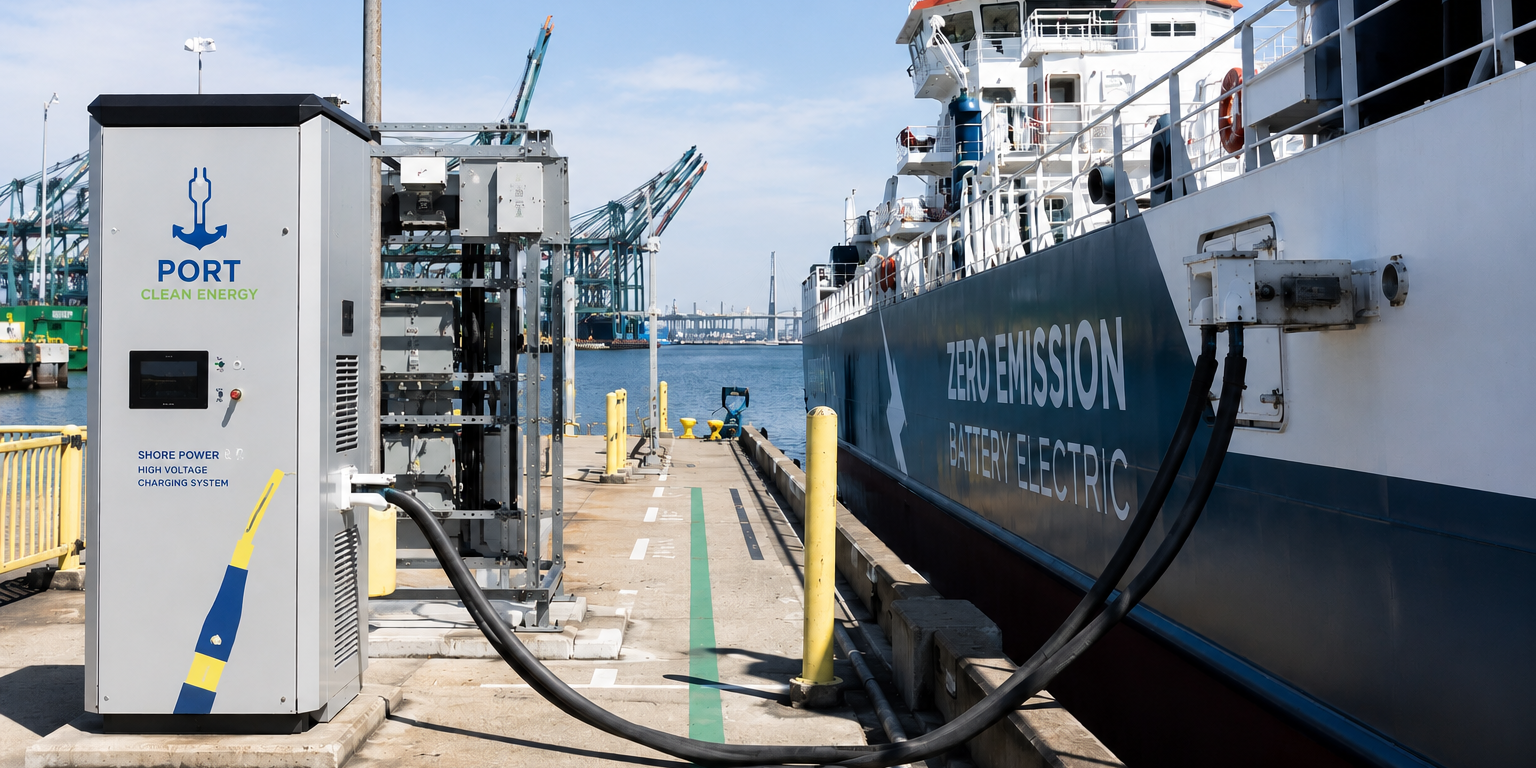
Congress Introduces Next Generation Shipping Act to Advance U.S. Maritime Innovation
WASHINGTON, D.C. (June 26, 2026) — Federal lawmakers have reintroduced landmark legislation aimed at positioning the United States as a global leader in clean shipping technologies, maritime innovation, and next-generation port infrastructure.
Introduced by Representatives Nanette Barragán (CA-44) and Troy A. Carter, Sr. (LA-02) alongside Senator Chris Van Hollen (MD), the Next Generation Shipping Act would establish a $1 billion annual program within the U.S. Maritime Administration (MARAD) to accelerate research, development, demonstration, and deployment of advanced maritime technologies.
The legislation seeks to strengthen American competitiveness while reducing emissions from one of the world’s most important transportation sectors.
Investing in America’s Maritime Future
Global shipping is rapidly transitioning toward cleaner vessels, alternative marine fuels, advanced propulsion systems, and modernized port infrastructure. Countries throughout Europe and Asia have already committed billions of dollars toward these technologies, creating increasing pressure for the United States to remain competitive.
The Next Generation Shipping Act would support:
- Development of zero-emission and low-emission commercial vessels
- Advanced maritime propulsion technologies
- Port electrification and modernization
- Charging and fueling infrastructure
- Domestic shipbuilding innovation
- Workforce development and skilled maritime jobs
- Research partnerships between industry, government, and academia
The program is designed to stimulate private investment while strengthening the U.S. maritime manufacturing base and creating high-quality American jobs.
Benefits Beyond Emissions
While reducing greenhouse gas emissions remains an important objective, supporters emphasize that the legislation is equally about economic competitiveness, technological leadership, and strengthening domestic industry.
Modernizing the nation’s maritime sector could help:
- Improve air quality in port communities
- Increase U.S. shipbuilding competitiveness
- Expand domestic manufacturing
- Accelerate commercialization of emerging maritime technologies
- Support workforce training programs
- Strengthen supply chain resilience
A Growing Opportunity for Marine Electrification
For companies developing electric propulsion systems, batteries, charging infrastructure, hydrogen technologies, and alternative marine fuels, the proposed legislation represents a significant opportunity.
Federal investment could help accelerate commercialization of technologies including:
- Electric commercial vessels
- Hybrid propulsion systems
- Shore power and vessel charging
- Battery manufacturing
- Smart port infrastructure
- Autonomous energy management
- Alternative marine fuels
The legislation recognizes that achieving cleaner shipping will require innovation across the entire maritime ecosystem—not simply new vessels, but also supporting infrastructure, workforce development, and domestic manufacturing.
Supporting American Innovation
Industry organizations have welcomed the proposal, noting that sustained federal investment is essential if the United States hopes to compete in the rapidly evolving global maritime market.
By supporting research, demonstration projects, infrastructure deployment, and commercialization, the legislation aims to ensure American companies remain at the forefront of next-generation shipping technologies while creating long-term economic opportunities across the maritime sector.
If enacted, the Next Generation Shipping Act would represent one of the largest federal investments in maritime innovation in U.S. history and could serve as a catalyst for the future of zero-emission shipping, resilient ports, and advanced marine transportation.
Source article: Pacific Environment announcement. The bill would establish a proposed $1 billion-per-year MARAD program focused on advancing clean shipping technologies, port infrastructure, workforce development, and U.S. competitiveness.
